

...so that you can run your business to achieve the life you want to create
'What profit do you need to make to support your life and dreams, professionally and personally?’
Life happens and can change rapidly from one day to the next. One day everything can be plain sailing, the next something can come out of the blue and knock you off course. Whilst you can’t predict what will happen today, tomorrow, next week, next month, next year… your accounts are there to help you navigate the best solutions and support for your circumstances.
We’re a firm believer in working to create the life you want to achieve which is why we take a holistic approach to understanding, budgeting and helping you confidently navigate your numbers.
Start by asking yourself the following questions:
- How do you feel about your business currently?
- How would you like it to be?
- Where would you like your business to be in the next 5 years? 10 years?
- Is it generating sufficient income to support the lifestyle you wish to have?
Even if everything is ticking along nicely, there could still be ways of improving things. Maybe allowing you to work less hours or providing greater support to your team and others.
Or even achieve something you never thought was possible…
What dreams would you love to take flight?

Decision making:
How do you currently feel about making big decisions?
At our Planning Ahead event we were delighted to have Sgt Chris Faulkes from the Army Air Corps share insights into what we can learn from ‘Operation Market Garden’ for business and life decision making.
| Operation Market Garden | Challenges faced in reality | Honest risk assessment and mitigation | What this looks like for your planning and budgeting | |
|
‘Capture and take over the bridges using combined forces of airborne and ground assistance.’ | Over confidence – there were 85k military personnel that needed to come together all down the same one road. | Continuous reassessment – how have things change next week, next month, ensure getting the best out of what you’re trying to achieve, and have courage to change when strategy no longer fits |
|
|
‘Take the opposition by surprise and complete capture in 2-3 days’ | Poor intelligence use – the data being used to make decisions was 6 weeks old. Photos that were 2 days old were dismissed | Strong decision making requires listening to those on the ground and validate internally and externally |
|
|
‘Weakened resistance of opposition’ ‘Communicate by radio’ |
Communication breakdown – water, trees, steel absorb and block radio signals so many were unable to communicate | Keep all communications clear, precise, direct and honest – to ensure the receiver receives the message as the sender intended |
|
|
‘Everyone will be home by Christmas’ | Unrealistic timings with the sheer number of personnel, fuel, speed and logistics | Have a flexible ‘fudge factor’ and courses of action |
|
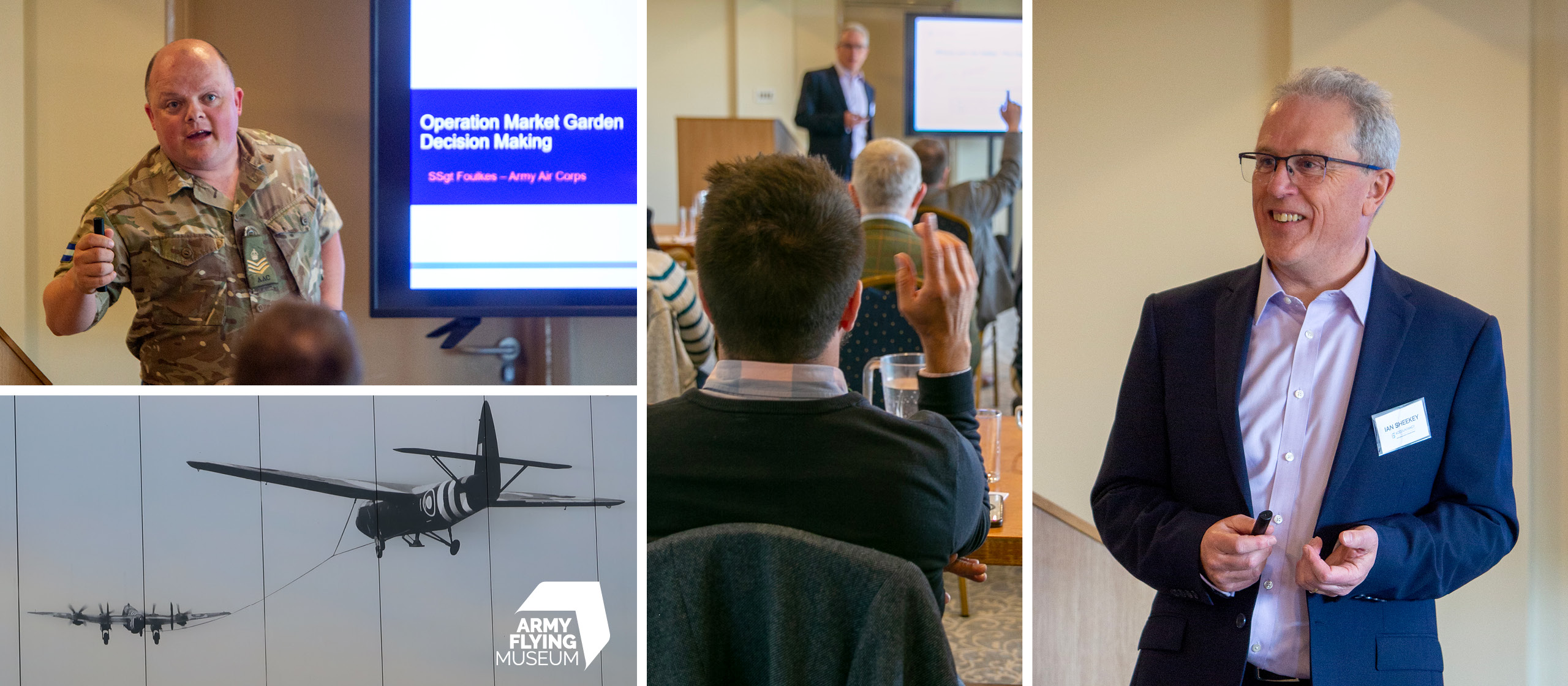
Whilst the Market Gardens Operation strategy was one of the largest military failures, hoping and wishing that everything would all work out, there were great innovations, teamwork and courageous examples of human spirit.
The Horsa Glider and their pilots are one of their success stories. A fine feat of engineering and iconic symbol of achieving your goals through navigation by numbers.
Decision making doesn’t have to be guesswork – you can use your data to help you reach your goals.
Photo Credits: Jefferson Sees/Unsplash, Victoria Prymak/Unsplash, Carolyn White, and many thanks to The Army Flying Museum for hosting us at their inspirational venue.
How to create a budget
1. First, you need to set up a baseline to measure against.
Start with your figures for the last 12 months and review your income and expenses. Can you realistically achieve the same again?
- Does it cover your current expenses and needs?
- What goals are you working towards, professionally and personally? Eg:
- When do you plan to retire?
- What do you need to support your lifestyle?
- Do you have plans for growth?
- How are you going to pay off your mortgage?
- Do you need to create a university fund?
- Were there any unexpected expenses?
- Are there risk mitigations you need to put in place?
- Was there anything that was a one-off purchase, or a large project you don’t need to budget for in the next 12 months?
2. Review all aspects against your goals:
- If you’re looking to increase turnover, what’s realistically achievable?
- Can you increase the number of sales?
- How many hours does it take to fulfil?
- Is it scalable / do you need to employ more staff?
- Can you increase your price?
- What’s the cost to you (time, resources, experience and training)?
- Are there any changes coming up (e.g. new equipment, premises, hires, legislation)?
Budgets aren’t set in stone and aren’t there to set you up for failure. They are there to help you navigate and support your growth and achieve your goals.
3. Review your budget and circumstances regularly, we recommend once a month so that you can respond to changes early.
Why understanding your numbers matters for confident decision making
Your accounts tell you a great deal, helping you to identify:
- potential risks and shortfalls
- seasonal trends
- monthly budgets
- clear financial forecasts
- any aspects that need adapting or a change of course
- opportunities…
It’s not only about the business financial figures but how your finances support and provide for your personal and family needs. Here at IS Accountancy we review with you your circumstances and discuss available options to help you make business and life decisions that you feel confident about making, driven by your data.
Support for every stage of your business and the life you want to create
Take time to revisit those initial questions, especially ‘What profit do you need to make to support your life and dreams, professionally and personally?’ and map them out using H.O.R.S.A.
Our H.O.R.S.A. strategy for budgeting:
Holistic – needs to be met (now and future, business and personal)
Outcome – goal / what you’re working towards (lifestyle / achievement / milestone)
Realistic – timings / resources / budgeting / planning etc based on real data, (your accounts)
Strategy – quarterly review your accounts, plan, respond and adjust direction for your circumstances (business and personal)
Assessment – identify and respond to risks and opportunities, budget for the unexpected (rainy day / emergency fund / protection)
Discover support for every stage of your business and the life you want to create with IS Accountancy – your accounting co-pilots – for confident decision making (big and small).
